
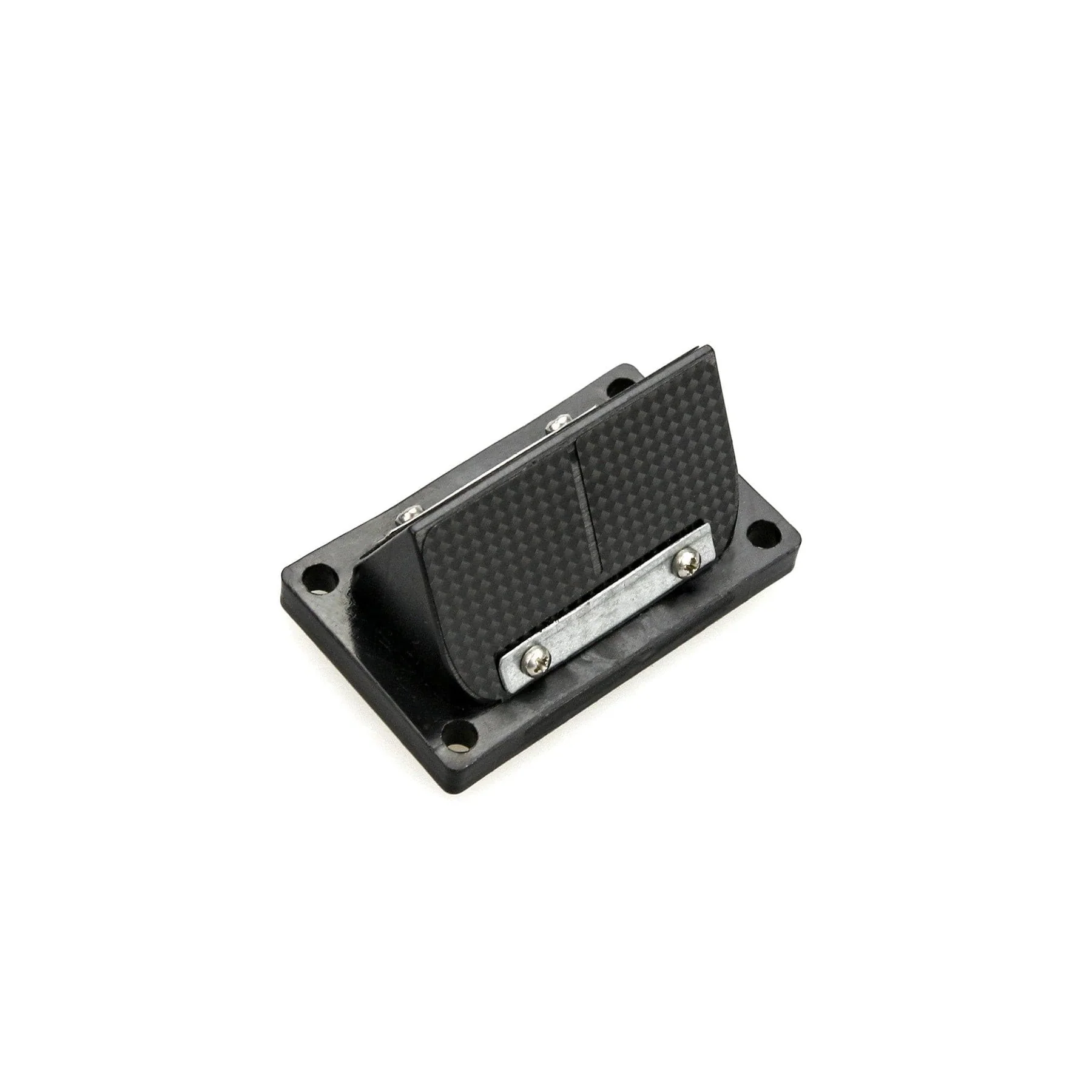
Reed Valve
-
A reed valve (also called a leaf valve) is a one-way check valve that permits flow (usually of an air‑fuel mixture) in one direction but prevents backflow.
-
In 2‑stroke engines, it is commonly placed between the carburetor (or intake manifold) and the crankcase, allowing the fuel/air mixture to enter the crankcase under vacuum and then preventing it from going backward when pressure rises. Motorcycle Specs+2compotec.pl+2
🏗 Reed Valve in Jetsurf / Jetboard Engines
For Jetsurf boards, the reed valve used is Item A000097 — the “Reed‑Ventil / Reed Valve” in their parts catalog.
-
It uses carbon fiber / composite reed petals (thin flexible “petals” or “blades”).
-
It is used in many of their combustion engine models across years: e.g. UltraSport 2016–2018, GP 2016–2018, Adventure DFI in later years, etc.
-
The reed valve is located between the carburetion (or intake) and the crankcase.
If that makes sense, here are its functions, failure modes, inspection tips, and replacement advice.
⚙ How It Works
-
Intake / Vacuum Stroke
-
When the piston moves upwards, it creates a partial vacuum in the crankcase.
-
That vacuum causes the reed petals to flex open, allowing the air/fuel mixture to be drawn in from the carburetor/intake side into the crankcase.
-
-
Compression / Pressure Stroke
-
When the piston moves down, pressure builds in the crankcase.
-
The reed petals close (press against their seat), sealing off the intake so that the mixture is forced via the transfer ports into the combustion chamber, and preventing backflow.
-
Thus, it ensures that the mixture only flows into the engine, not backward, improving volumetric efficiency and preventing reversals.
🔎 Typical Problems / Failures
-
Petal wear or cracking: Over time the carbon or composite reed petals degrade, may crack, chip, or delaminate from the mounting.
-
Gap between petal and body / seat: If the petal doesn’t seal completely (due to warping, wear, or damage), it allows leakage, leading to poor running, weak compression, or spitting back through carburetor.
-
Loose mounting or gasket failures: Where the reed valve is clamped or sealed, any leak there affects its performance.
-
Fatigue / vibration: The reeds oscillate at high frequency in operation; they may fatigue and eventually fail under continuous vibration.
-
Improperly seated or misaligned petals: If the petals don’t lie flush, you get leaks or rough performance.
As one user of a Jetsurf wrote:
“If you find a gap in plate and body it must be replaced… these plates vibrate with the rpms … they tend to be a high wearing part.”
✅ Inspection Tips & Replacement Advice
-
Hold to light test: Remove the reed valve and hold it to a light source; if light seeps through gaps between petals and their seat, it’s a sign of sealing failure.Visual inspection: Look for cracks, chips, frayed edges, or delamination in the reed petals and the supporting structure.
-
Check flatness: Ensure the reed cage/seating surface is flat and not warped.
-
Check sealing surface: Clean, and if necessary lap the petal edge lightly on very fine stone or glass (manufacturer guidelines permitting) to improve seal.
-
Replace when damage is visible or performance is degraded: Because the reed valve is critical to intake efficiency, even small damage can lead to noticeable performance drop.
When replacing:
-
Use the exact part (for Jetsurf, A000097) to ensure proper fit and material.
-
Ensure the gasket or seal between the reed valve body and mounting surface is in good condition (the engine gasket kit includes reed valve gaskets).
-
Torque or clamp fasteners to correct specification to avoid distortion.
If you like, I can get you the technical specifications (dimensions, material thickness, mounting layout) for the Jetsurf A000097 reed valve so you can verify whether a replacement you have is correct.


Reviews
There are no reviews yet.